Jun 26, 2026Project Case Studies
Are Accropodes Built to Stop Waves or Tanks?
Ever wondered if those massive, spiked concrete blocks on the coast are anti-landing barricades or breakwaters?
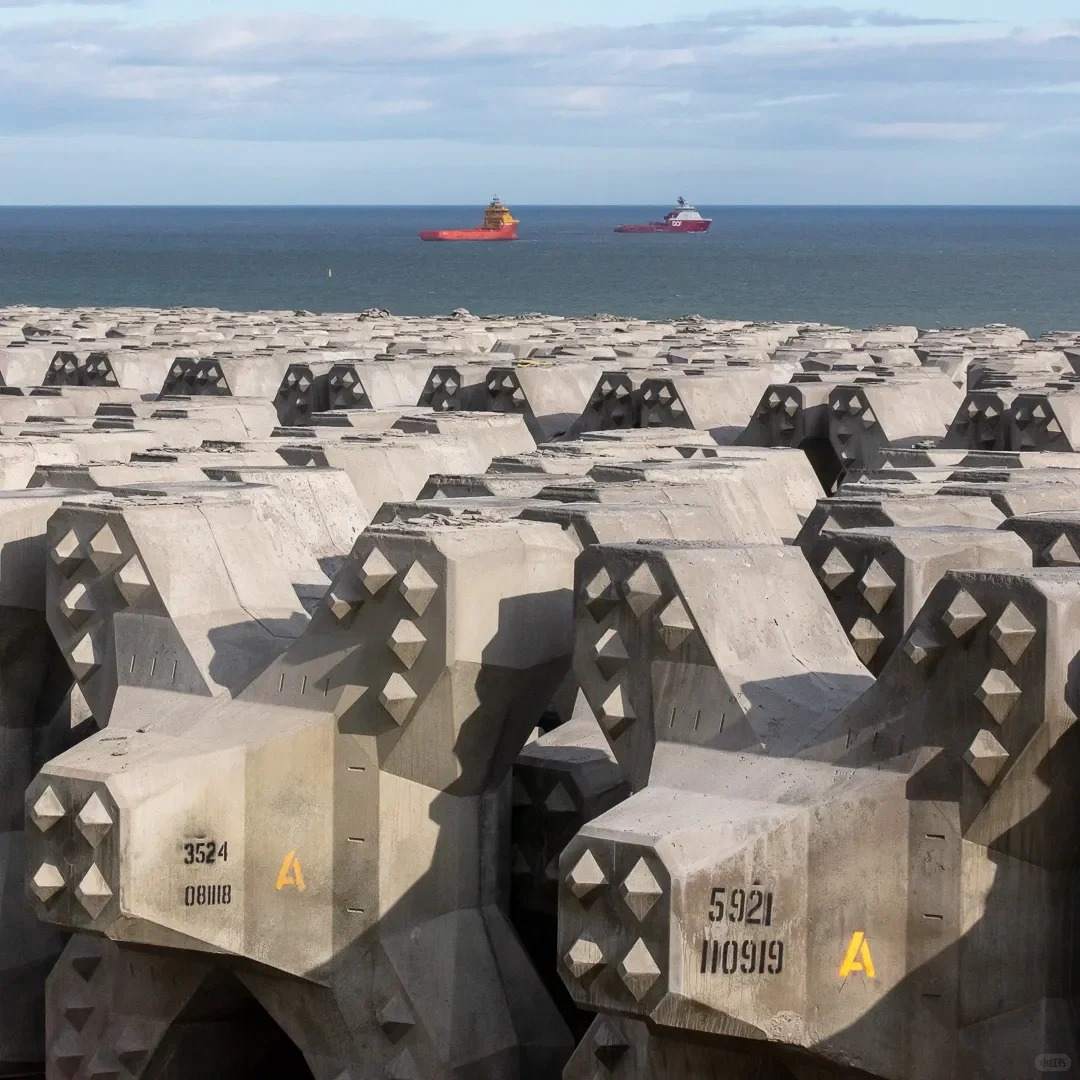
The Concrete Behemoths by the Sea
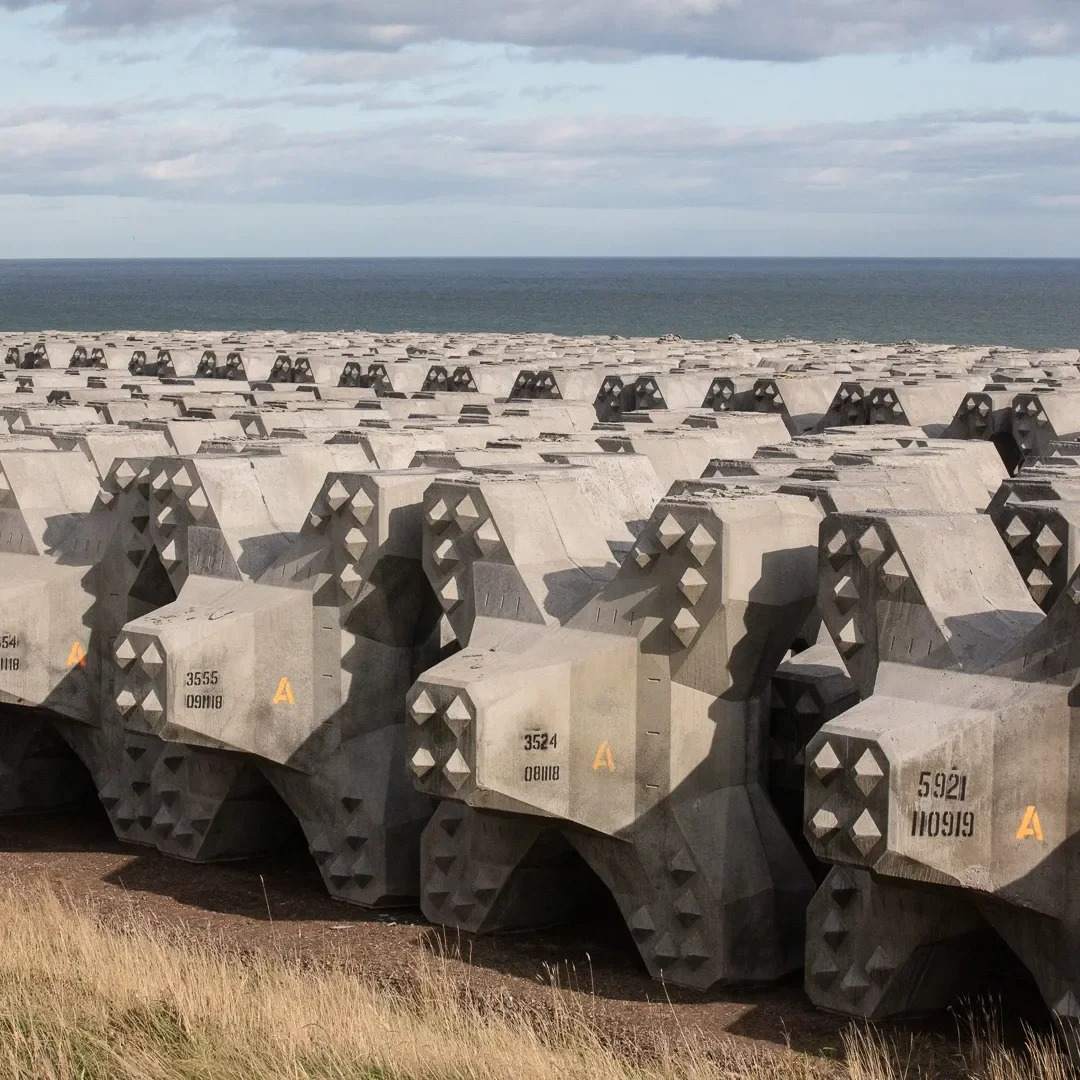
Take a look at the photo above. When most people see these massive, spiked concrete beasts lined up along the shoreline, they feel an undeniable sense of intimidation. The first thought that usually comes to mind is: "Are we expecting a tank invasion?"
It is a completely fair question. Even some of our engineering clients have jokingly asked if these are military tank traps or coastal infrastructure. Today, let's clear up the mystery.
In the civil engineering world, these hardcore, multi-legged structures are known as Accropodes (a highly advanced type of wave-dissipating block).
Not a Military Barricade, but a Coastal Guardian
Let’s get one thing straight right away: Accropodes are not designed for war.
Their sole mission—and they do it incredibly well—is to take a relentless, brutal beating from the ocean. They are the frontline defense protecting our seaports, breakwaters, and vulnerable coastal cities from storm surges and devastating erosion.
So, why not just build a massive, flat reinforced concrete wall to block the water? That is a common misconception. If you build a flat vertical wall, massive waves will eventually batter it to pieces, or worse, create a massive "reflective wave" that scours the foundation right out from under the wall.
The Engineering Secret: "Organized Chaos"
The true genius of the Accropode lies in its complex, seemingly bizarre geometry. It doesn't fight the ocean with brute force; it uses clever physics.
- The Interlocking Grip: Unlike standard bricks, Accropodes are not stacked neatly. They are placed randomly to interlock with one another. Like a dense, tangled root system, they grip together tightly. Once they settle, they refuse to budge, no matter how hard the ocean pounds them.
- Eating the Wave's Energy: When a massive wave hits, the complex shape of the Accropode immediately tears the wave's energy apart into thousands of smaller, chaotic currents. These currents crash into each other within the intricate gaps of the blocks, turning destructive kinetic energy into harmless turbulence and white water.
It doesn't rigidly block the wave; it absorbs and dismantles it.
Could They Stop an Invasion?
Let's go back to that original question. While their design intent has absolutely nothing to do with military defense, try driving an amphibious assault vehicle through a dense, chaotic field of 20-ton, spiked concrete boulders. It would be an absolute nightmare.
Objectively speaking, their sheer size and complex geometry make them a formidable, uninvited anti-landing barricade. But to a civil engineer, that is just a fun, unintentional byproduct of heavy coastal defense.
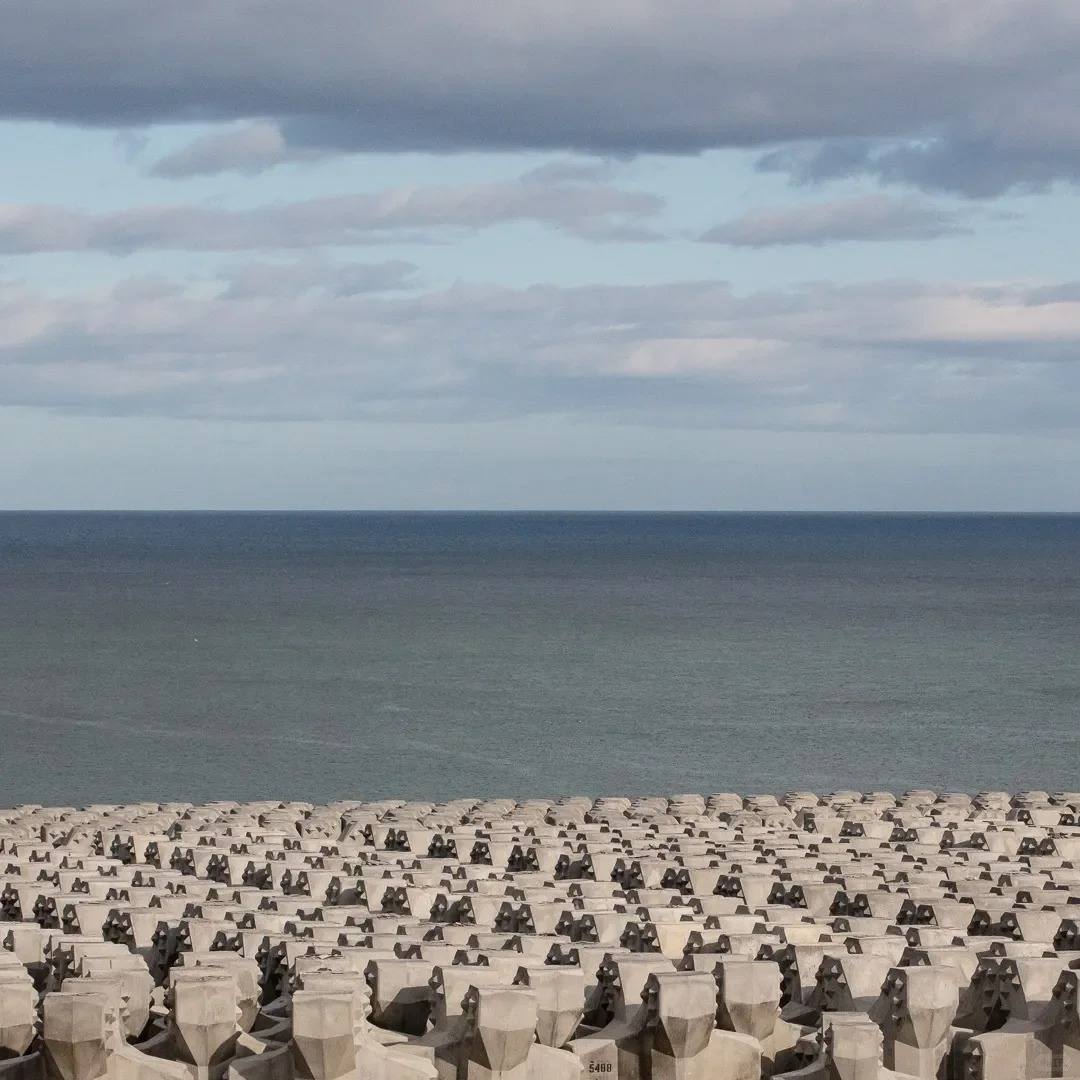
The Steel Formwork Behind the Concrete
Before these 20-ton guardians are dropped into the sea, they have to be cast. And casting a massive, geometrically complex concrete block requires a seriously tough, high-precision steel shell. In the photo, you can even see the production batch numbers (like 3524 and 5921) painted on the blocks, highlighting the massive scale of industrial manufacturing required.
This is exactly where Hyson Industry steps in. We specialize in engineering the heavy-duty steel formwork required to cast these complex breakwater blocks.
Transforming heavy steel plates into these intricate geometric molds requires absolute zero compromise. At our Nantong facility, we use high-power CNC laser cutting and automated robotic welding to ensure every mold can handle the immense hydrostatic pressure of wet concrete without bulging or warping. More importantly, our precision engineering guarantees that the molds can be stripped quickly and smoothly on the job site, keeping your project moving at top speed.
Behind every indestructible concrete guardian is a high-precision steel parent.