Jun 26, 2026Company News & Events
From "Replacing Wood" to Precision Engineering: The Evolution of Steel Formwork
Trace the journey of steel formwork from the 1970s revolution to today's high-tech infrastructure solutions.
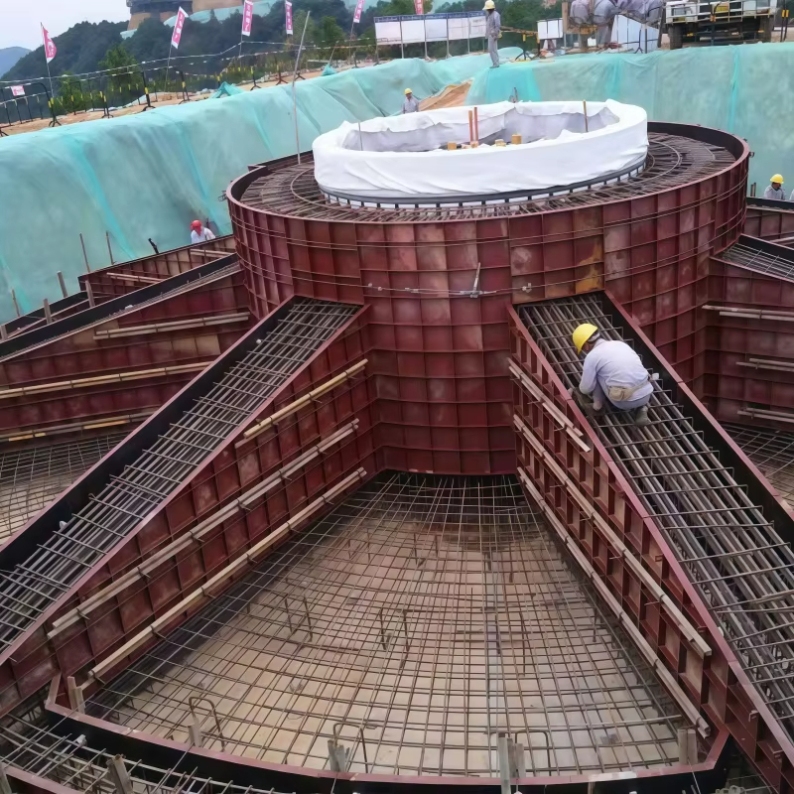
A Legacy Cast in Steel
Every bridge pier and high-rise core you see today tells a story not just of concrete, but of the mold that shaped it. The history of steel formwork is the history of modern construction itself—a relentless march from manual craftsmanship to industrial precision.
At Hyson Industry, with our 15 years of immersion in the Nantong construction belt, we have witnessed this evolution firsthand. We aren't just manufacturing steel; we are carrying forward a legacy of engineering innovation.
Phase 1: The Awakening (1970s - 1980s)
The "Steel Replacing Wood" Revolution
Before the 1970s, construction was a timber-heavy industry. But as forests dwindled and projects grew larger, a change was inevitable.
- 1979 - The Turning Point: China successfully developed the first "Combined Steel Formwork." This wasn't just a new product; it was a national strategy.
- The Golden 80s: Following the national policy of "Replacing Wood with Steel," the industry exploded. By the mid-80s, over 75% of construction sites had switched to steel.
Hyson's Take: This era established the supply chain and the skilled workforce in China. It laid the foundation for regions like Nantong to become global hubs for formwork manufacturing.
Phase 2: The Age of Infrastructure (1990s)
From Standard Plates to Heavy Customization
In the 90s, skyscrapers began to pierce the skyline, and massive highways connected cities. The old, small "standard combination plates" were no longer enough. The industry needed something stronger.
- The Shift: While the market share of small steel plates declined (replaced by plywood for simple slabs), Heavy-Duty Steel Formwork found its true calling.
- Specialized Applications: Steel became the undisputed king for Bridge Piers, Tunnels, Chimneys, and Retaining Walls.
Hyson's Take: This is where Hyson’s DNA was formed. We recognized that for heavy infrastructure—like the Sutong Bridge projects—only custom-designed, heavy-duty steel could withstand the immense lateral pressure of mass concrete pouring.
Phase 3: Modern Precision (2000s - Present)
Smart Manufacturing & The Green Future
Enter the 21st century. The game changed from "making it strong" to "making it precise and efficient."
- Technological Leap: The introduction of Assembly-type Steel Formwork and All-Steel Large Templates revolutionized efficiency.
- The Current Landscape: Today, while Aluminum Formwork competes in residential housing, Steel Formwork remains dominant in Civil Engineering (Bridges, Hydropower, Tunnels) due to its unmatched load capacity and reusability (300+ times).
Hyson's Take: We have embraced this era by integrating Robotic Welding and 12 Design Patents into our production. We aren't just fighting the competition; we are setting the standard for durability and "Fair-Faced" finishes in the global market.
The Future: Why Steel is Here to Stay
History shows that materials come and go, but steel endures. As we look toward 2030, the demand for Green Construction favors steel more than ever. It is recyclable, repairable, and durable.
At Hyson Industry, we are proud to be the qualified supplier for CCCC and CRCC, continuing the tradition of excellence that started back in 1979.