Technical Insights
2026年6月3日
Guide to Steel Formwork Accessories: Preventing Blowouts on Site
Prevent concrete blowouts and grout leakage. Discover the essential steel formwork accessories (tie rods, wing nuts, wedge pins) that hold your project together. Expert tips from Hyson Industry.
Anyone who has managed a major infrastructure site knows the ultimate nightmare during a massive concrete pour (like a towering bridge pier or a heavy tetrapod block): a formwork blowout.
Many people mistakenly believe that as long as the steel formwork panels are thick enough, everything will be fine. But the reality is, the steel plates are just the shell. What actually holds that massive steel structure together against hundreds of tons of hydrostatic pressure are the seemingly insignificant formwork accessories.
Today, let's skip the boring textbook jargon and talk practically about the essential accessories that keep your heavy-duty steel formwork from bursting open on site.
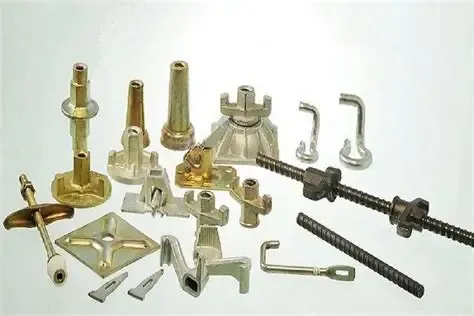
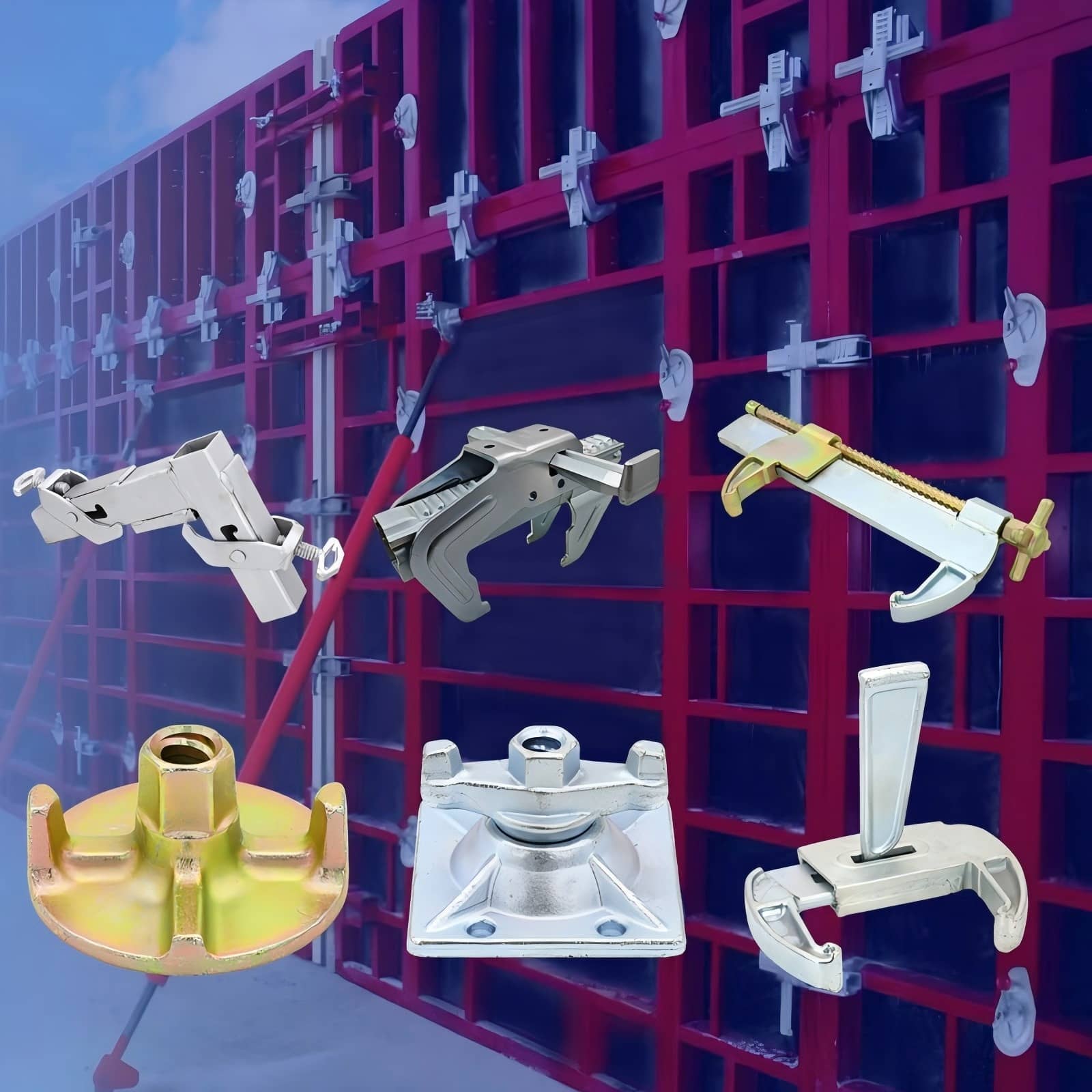
1. Tie Rods & Wing Nuts: The Backbone of the System If formwork panels are the bun, the tie rod is the burger patty holding it all together. Tie rods pass straight through the concrete wall or column, absorbing the immense outward pressure. To secure these high-tensile rods, you need heavy-duty Wing Nuts or Hex Nuts on both ends. A quality tie rod system must have smooth, deep threads that won't strip. If you use cheap, low-grade tie rods, the high-frequency vibration of the concrete will snap them like twigs.
2. Wedge & Pin (or U-Clips): The Speed Builders In infrastructure projects, time is money. How do you connect hundreds of steel panels quickly? You use wedges and pins. Align the panel frames, insert the pin, hammer the wedge tight, and the joint is locked in seconds. While simple, these accessories demand extreme manufacturing accuracy. If your formwork supplier has poor CNC precision, your site crew will spend hours hammering pins that just won't fit the holes.
3. Formwork Clamps: The Grout-Leak Killers Even with pins in place, uneven pressure can cause microscopic gaps between panels. That’s where formwork clamps come in. They tightly grip the adjacent panel frames, enforcing a strict "zero-gap" seal. No gap means no grout leakage, which is the secret to achieving that flawless, "fair-faced" concrete finish.
4. Lifting Lugs & Prop Joints: The Lifelines Heavy-duty steel molds weigh hundreds of kilograms, sometimes tons. Moving them relies entirely on cranes. The lifting lugs pre-welded onto the formwork are literally the lifelines for your site crew.
This is exactly why we are so obsessed with joint integrity at Hyson Industry. Some factories use quick automated spot welding for lifting lugs and load-bearing ribs to save time. But we know how brutal job sites can be, and robotic welders can sometimes miss the tricky angles on complex molds. That is why in our Nantong facility, all critical accessory attachment points and structural ribs are 100% manually welded by our most senior, certified craftsmen. They ensure deep, full-penetration welds that will never snap under extreme site conditions.
The Bottom Line: A heavy-duty mold is only as strong as its weakest accessory. Whether you are casting a standard box girder or a complex interlocking breakwater block, never cut corners on your connection hardware.
Looking for a reliable OEM fabricator for your next infrastructure project? 👉 Send your drawings to Hyson Industry today. Let's discuss how our hardcore craftsmanship can save you time and money on site.